I have just been watching the first Super Happy Maker Fun Hour from the State Library of Colorado. It is interesting to see different ways people do G+ hangouts, and the content is great. Watch out for the next one in February. For those in NSW, they start at 6.00am (at least they do with current time zone things).
Great work by the State Library of Colorado, and they have other very useful resources for makerspaces too.
The resources and other information from today are here, and you can watch the video (below).
Showing posts with label makers. Show all posts
Showing posts with label makers. Show all posts
Thursday, January 21, 2016


Tuesday, August 18, 2015
Public libraries and 3D printers
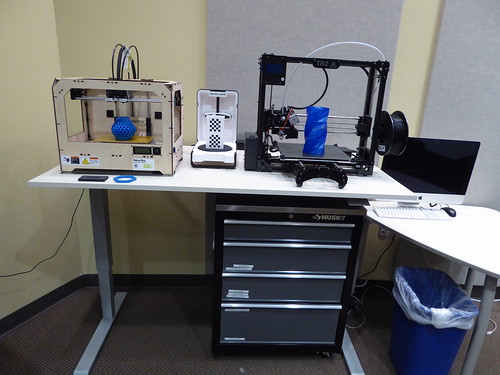
3D printers are becoming more common in public libraries, but different approaches are taken as to accessing them, or even seeing them in operation.
Arapahoe District Libraries encourages their community to request 3D prints. The printing is free. The aim is for the community to explore and discover possibilities. Arapahoe District Libraries demonstrate 3D printing simply by having the printers working, all the time. This is impressive. Each of their libraries I walked in to (see below) I saw 3D printing. It was a normal feature in the library, just as opacs, picture books, and information assistance. The sign you can see on the tech bar below shows when demonstrations will be happening in a range of tech options at the library. It was every day, at each of the libraries below, showing what was possible, and encouraging the community to think about even more.
May Library, Arapahoe District Libraries
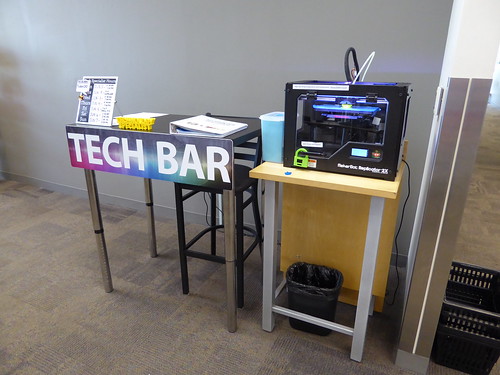
Sheridan Library, Arapahoe District Libraries
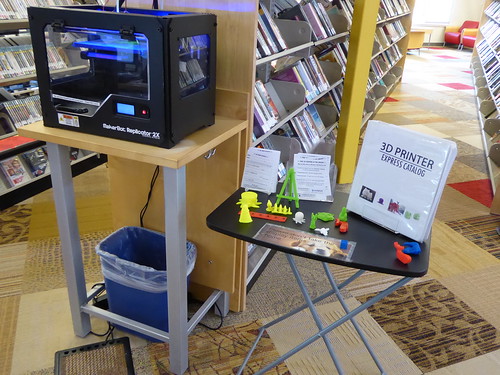
Koelbel Library, Arapahoe District Libraries
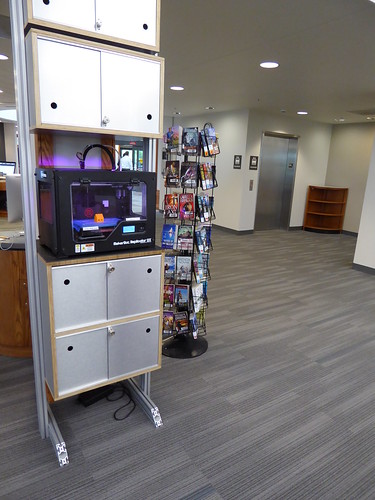
Southglenn Library, Arapahoe District Libraries
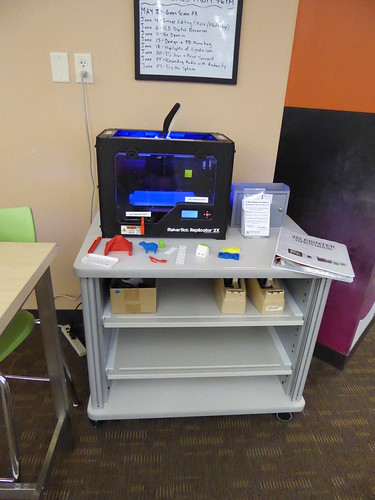
Castlewood Library, Arapahoe District Libraries
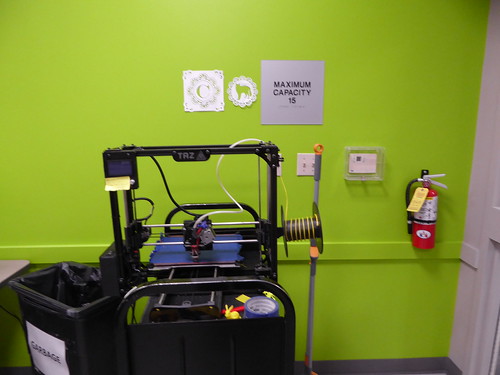
Smokey Hills Library, Arapahoe District Libraries
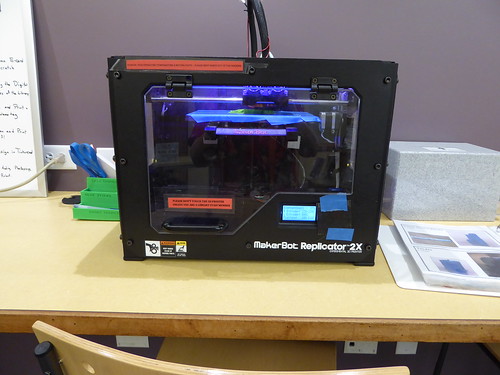
The above libraries are all part of the Arapahoe Library District, and they are impressive.
Other libraries take a different approach.
Library 21C has a maker space (see below image) , which includes a 3D printer. They have a floor of making including a large auditorium which is also a high quality recording space. This is an amazing library, which will have a separate post later on with more information.
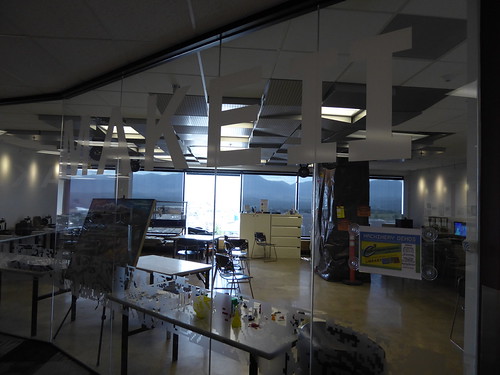
Burton Barr, the central Phoenix Public Library has refurbished a large space for a range of making, it is staffed, with long hours. This space includes 3D printers (see below). This will also have a separate blog post. This was a very impressive space, and impressive in terms of staffing too.
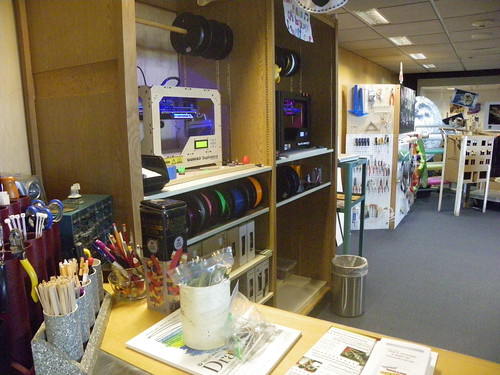
Anthink Brighton (below) as The studio with a range of maker tools including sewing machines and 3D printing. This is not an open space, but is available for making one and a half hours a week. For the rest of the time the space is used for a range of other purposes. This seemed short access to these tools, but local decisions had to be made about staffing.
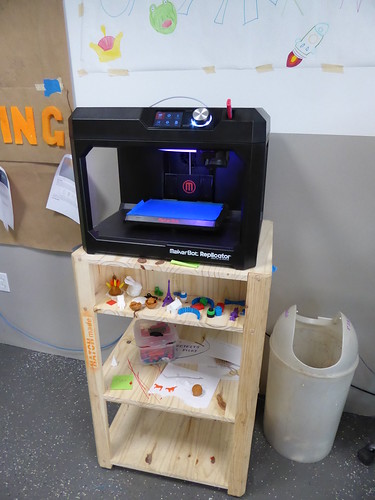
Hatch from Watertown Public Library is in the mall rather than the library, and it also has a 3D printer.
Arapahoe District Libraries encourages their community to request 3D prints. The printing is free. The aim is for the community to explore and discover possibilities. Arapahoe District Libraries demonstrate 3D printing simply by having the printers working, all the time. This is impressive. Each of their libraries I walked in to (see below) I saw 3D printing. It was a normal feature in the library, just as opacs, picture books, and information assistance. The sign you can see on the tech bar below shows when demonstrations will be happening in a range of tech options at the library. It was every day, at each of the libraries below, showing what was possible, and encouraging the community to think about even more.
May Library, Arapahoe District Libraries
Sheridan Library, Arapahoe District Libraries
Koelbel Library, Arapahoe District Libraries
Southglenn Library, Arapahoe District Libraries
Castlewood Library, Arapahoe District Libraries
Smokey Hills Library, Arapahoe District Libraries
The above libraries are all part of the Arapahoe Library District, and they are impressive.
Other libraries take a different approach.
Library 21C has a maker space (see below image) , which includes a 3D printer. They have a floor of making including a large auditorium which is also a high quality recording space. This is an amazing library, which will have a separate post later on with more information.
Burton Barr, the central Phoenix Public Library has refurbished a large space for a range of making, it is staffed, with long hours. This space includes 3D printers (see below). This will also have a separate blog post. This was a very impressive space, and impressive in terms of staffing too.
Anthink Brighton (below) as The studio with a range of maker tools including sewing machines and 3D printing. This is not an open space, but is available for making one and a half hours a week. For the rest of the time the space is used for a range of other purposes. This seemed short access to these tools, but local decisions had to be made about staffing.
Hatch from Watertown Public Library is in the mall rather than the library, and it also has a 3D printer.
Saturday, August 15, 2015
Sydney mini maker faire 2015
This was the second year I have been to this. It was great. I was sorry to not see the Embroidery Guild represented this year, but there were will many amazing things to look at at play with. I also had some people very keen to explain what maker spaces were to me. You can read about the different people/organisations and products here.
Some of the interesting things were:
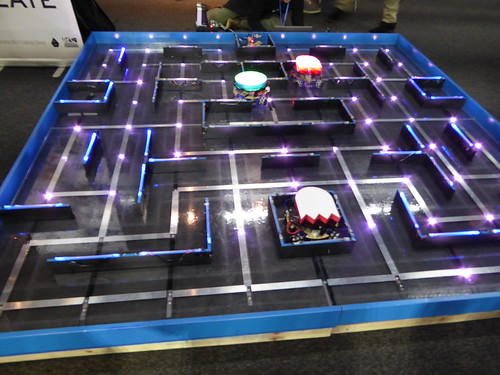
the robotic pacman was lovely, and popular,
a laptop with a default 3D scanning webcam (this was wonderful)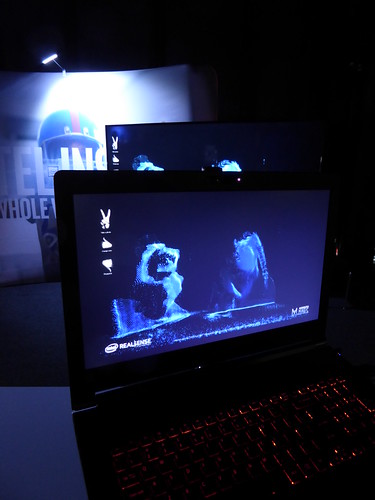
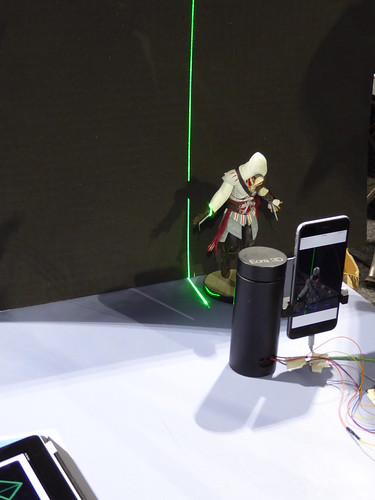
a 3D scanner the size of a can of soft drink
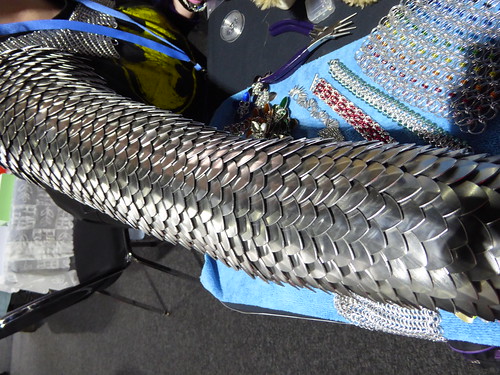
scale armour - which rippled
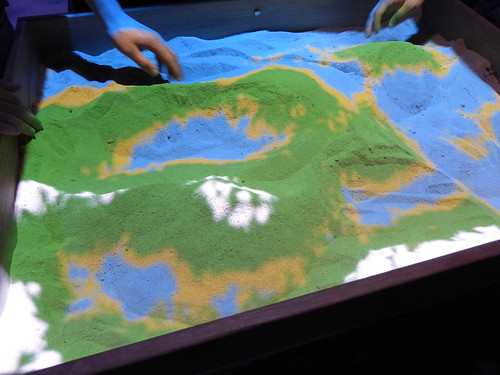
a sand pit (yes, with real sand) where when you change the topography, the colours mapping the topography adjust to the new layout (this was great)
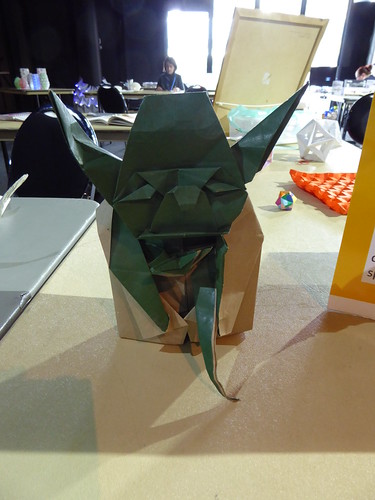
the origami Yoda was only some of the origami on display - and lots of people were creating with origami
You can see all my photographs from it here
Some of the interesting things were:
the robotic pacman was lovely, and popular,
a laptop with a default 3D scanning webcam (this was wonderful)
a 3D scanner the size of a can of soft drink
scale armour - which rippled
a sand pit (yes, with real sand) where when you change the topography, the colours mapping the topography adjust to the new layout (this was great)
the origami Yoda was only some of the origami on display - and lots of people were creating with origami
You can see all my photographs from it here
Thursday, July 16, 2015
Anythink Brighton
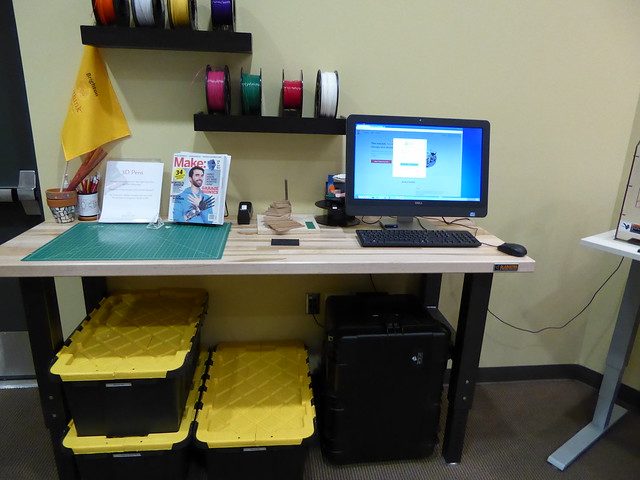
This has a studio space
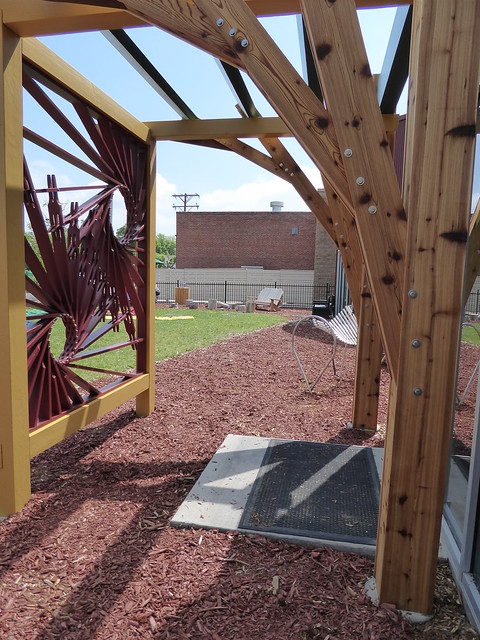
There is a lovely outdoor space which is well used
You can see more photographs here.
There is a lovely outdoor space which is well used
You can see more photographs here.
Tuesday, July 14, 2015
Anythink Perl Mack
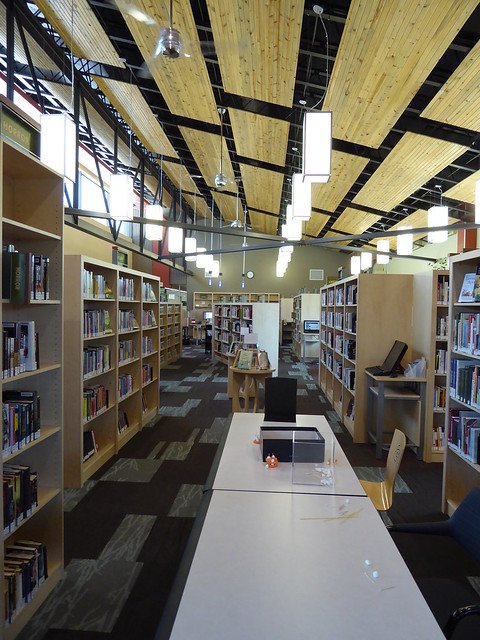
This is a lovely library
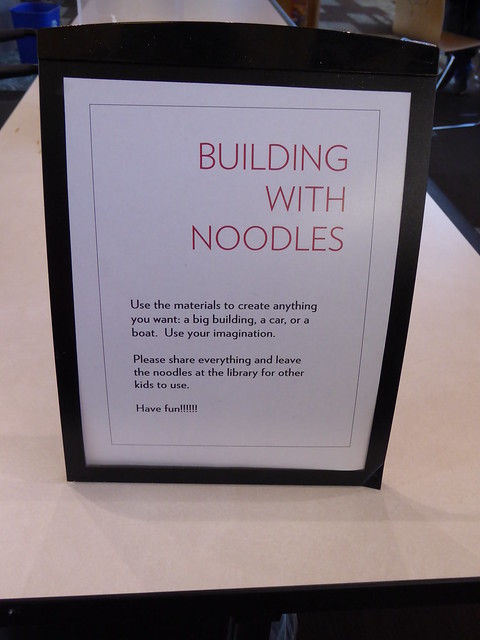
This table has noodles on it to encourage people to make things.
You can see more photographs here.
This table has noodles on it to encourage people to make things.
You can see more photographs here.
Thursday, July 9, 2015
Library 21C, CO
This is at Colorado Springs, and is one year old. It is in a refurbished building, and shows a great commitment to making and learning.
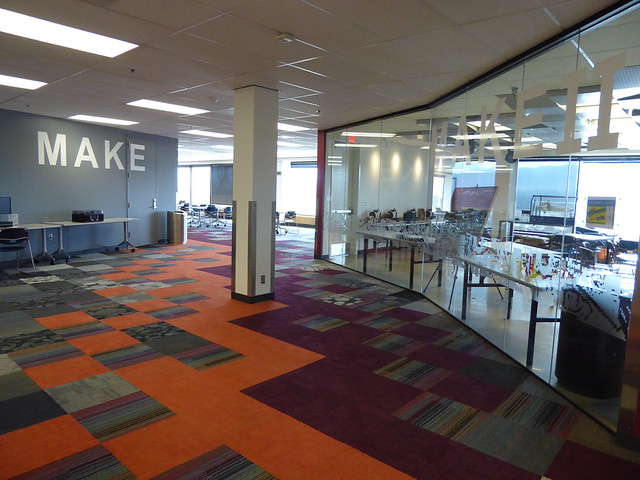 with nice service desks
 You can see more photographs here.
with nice service desks
You can see more photographs here.
Saturday, July 4, 2015
Hatch, by Watertown Free Public Library
Hatch is in a mall, near an innovation space.
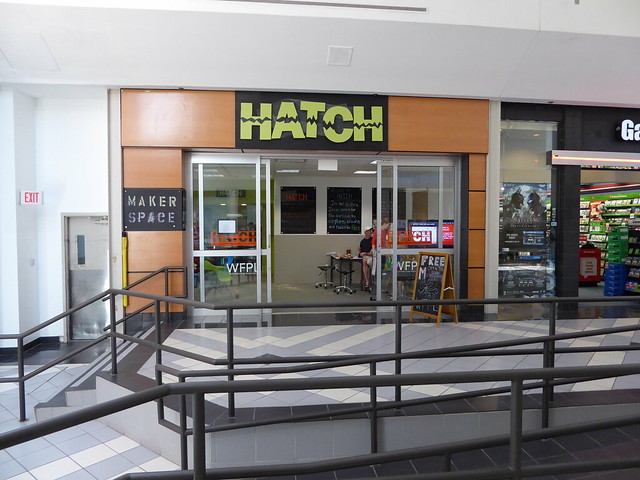 The day I visited it, I could not photograph it all as there was a coding class held out the back.
It was promoted through the mall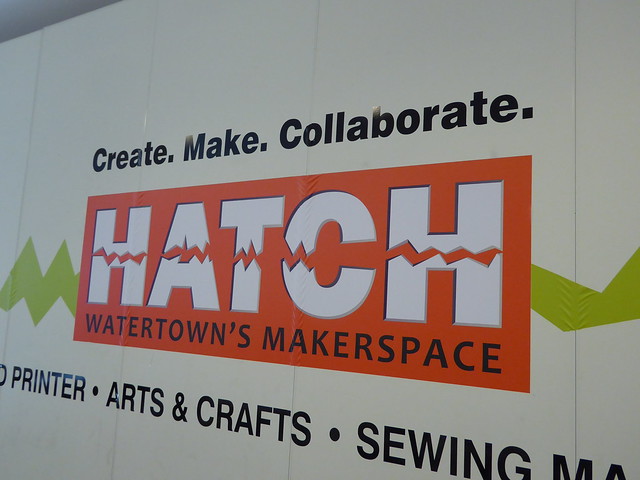 You can see more photographs here.
The day I visited it, I could not photograph it all as there was a coding class held out the back.
It was promoted through the mall
You can see more photographs here.
Friday, June 12, 2015
sewing and writing (or reading)
The author Mary Robinette Kowal writes about designing and making the dress for the cover of her latest book. She describes the research, the methods of sewing, and helpfully provides photographs. This is a very good tie in for libraries and makers. Can your library connect to people who want to make heritage costumes, or create works which are inspired by fiction (such as fantasy and science fiction). Think about how you can help this part of your community. The skilled information seeking of staff will help, and tools for the community could be useful. There may be programming potential or display potential.
Thursday, June 4, 2015
#blogjune Christchurch City Libraries
Christchurch City Libraries is very impressive in their use of social media. They were documenting post earthquake for local studies, and they record and showcase things happening in a their libraries.
This image shows a local studies angle
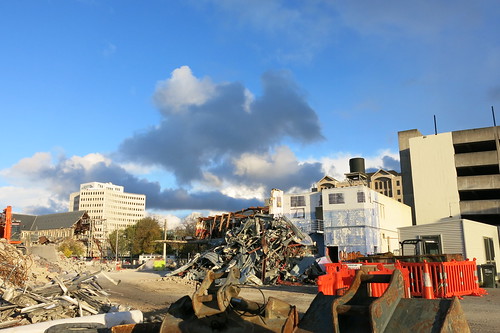
This a library program and commemoration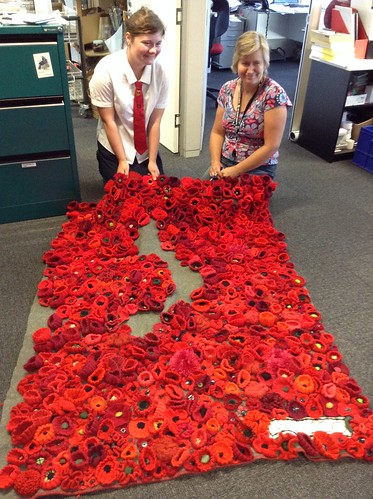
and this, a library program
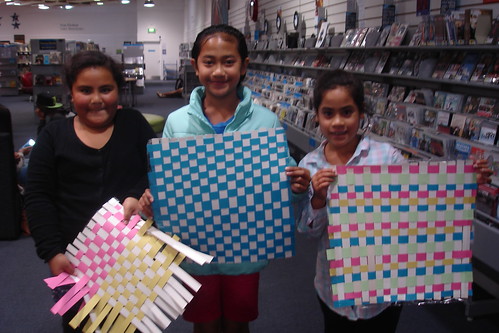
This a library program and commemoration
and this, a library program
Wednesday, June 3, 2015
#blogjune Chicago Public Library maker space
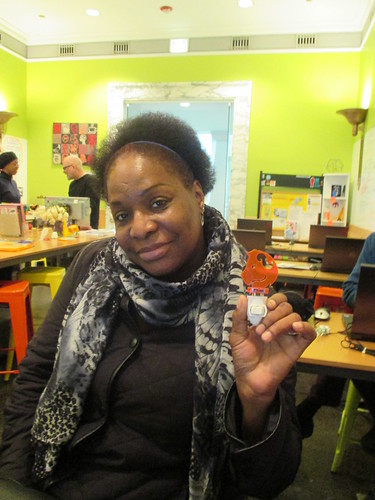
This is interesting because the Chicago Public Library maker space was started as short term and temporary, as a way of testing need and interest. The need and interest has continued. I like the way makers of all ages are photographed. You can see the whole stream here.
Wednesday, April 22, 2015
my review of Hoopla
 Hoopla: The Art of Unexpected Embroidery by Leanne Prain
My rating: 4 of 5 stars
This is an excellent book exploring how many different people use embroidery in their lives, and the great storytelling potential there is in this.
I was interested in the diversity of the embroiderers. I am going to use that term despite some of the people in the book preferring to use the term 'manbroidery" as it is all embroidery, regardless of who has the needle in their hands.
There are stories of people and stories of place. Some people took it up as a way to pass time in gaol, and there are some wonderful project associated with this, and with providing income after gaol. (The British Library work of art for the 800th anniversary of the Magna Carta has been partly embroidered by prisoners.). Some of the examples in the book are by individuals, and others are collaborations.
There is also background information for getting started in embroidery and some projects you could consider. Embroidery has a lot of potential for linking to local studies in public libraries, and there would seem to be some great possibilities for collaborative work. I really enjoyed reading this book, and am considering trying some embroidery.
View all my reviews
Tuesday, December 16, 2014
creating content
I use different online tools from time to time to create content. I have been making calendars for a few years. This year I was back to Redbubble (and I have to mention the brand so you can see the example). I was uploading photographs for a calendar, but the site suggested lots of other things I could do with the same content. You can see some of the examples in the image below.
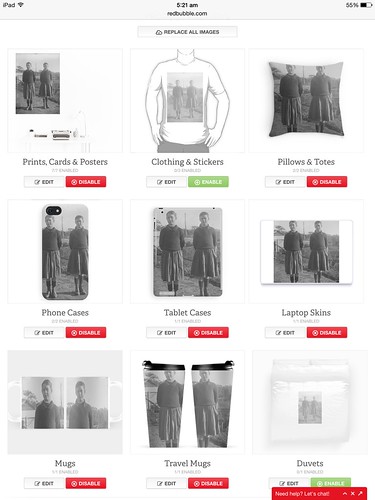
I think there is a lot of potential for public libraries to load a dozen or so photographs into this. With a dozen photographs you have have a print on demand calendar, and then with a few more minutes spent on the site have many other merchandise options, again print on demand so there is no financial outlay for the library. You can make sure your library logo, website, and other details are on the items, just as you do for things which are printed. These just happen to be print on demand.
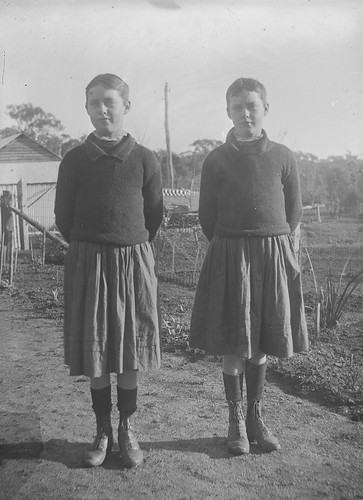
I tried some of the bags, and this is how they turned out. They look better in real life than in this photograph - and I am really pleased with them.
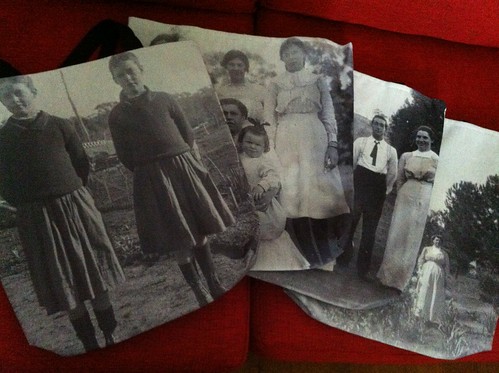
This is the original photograph.
I think there is a lot of potential for public libraries to load a dozen or so photographs into this. With a dozen photographs you have have a print on demand calendar, and then with a few more minutes spent on the site have many other merchandise options, again print on demand so there is no financial outlay for the library. You can make sure your library logo, website, and other details are on the items, just as you do for things which are printed. These just happen to be print on demand.
I tried some of the bags, and this is how they turned out. They look better in real life than in this photograph - and I am really pleased with them.
This is the original photograph.
Sunday, October 5, 2014
Reading inspired making
This latest blog post from Patrick Rothfuss shows some examples of what people have been inspired to make after reading his books. It starts with photographs, but goes on to other made things. It is lovely to see how different people were inspired to make. There are ideas for readers advisory and library programming. Think about the possibilities in the book2art reading group too.
Sunday, September 14, 2014
My review of Craftivism by Betsy Greer
 Craftivism: The Art of Craft and Activism by Betsy Greer
My rating: 5 of 5 stars
I had not come across the term craftivism before reading this book, but I had come across the actions of craftivism, having seen many people be active in Wrap with love, and other charity knitting done in many libraries, as well as other public projects (and been involved in some myself).
This book brings together a wonderful range of craftivism people and actions, some you will have heard of and others which are new. There are some lovely options, which help communities, such as the crafted baskbetball nets to replace stolen and vandalised ones, and the work of the Adithi collective who were stitching the story of Chile, but were not regarded as dangerous as they were embroidering. Their embroidery was able to tell people what was happening (because it was regarded as harmless), this subversiveness was critical for sharing information outside the country during a very tough time.
Some of the stories are about individuals and their singular paths of craftivism, while others are stories of communities or groups working together.
There are a many countries and styles of craftivism discussed, as well as some interesting historical examples. This book would be useful for libraries to add to their collections for local craftivists, but also for thinking about programs and services provided by the library, and for helping people connect to information to help with their craftivism. This is a key role which libraries and their staff can play.
It struck me that there should be a deliberate discussion in more places (including libraries), so that people think more strategically about the craftivism, and acknowledge that it is as powerful as it is.
I am now doing a lot of catch up reading about craftivism.
View all my reviews
Saturday, September 13, 2014
Makers place, Leichhardt
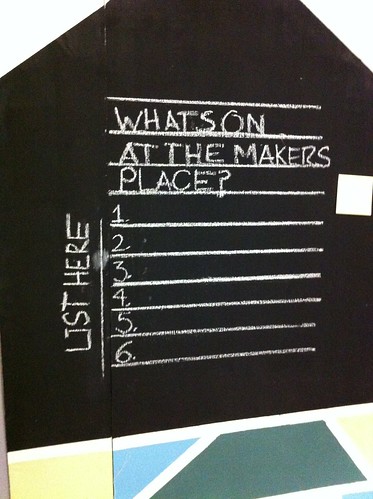
This makers place / maker space opened last night in Leichhardt. It is a pop up space, so it will be interesting to see what happens over time. There were other things there, but I could not have photographed them without being really intrusive. A potter was making pots on a wheel, there were four 3D printers, a microbiology space and a few other things. It looks really interesting. Thanks to @anne_doherty1 for the information about this.
You can see a few more photographs of the space here.
Three farm are working with various partners on this, including the local council.
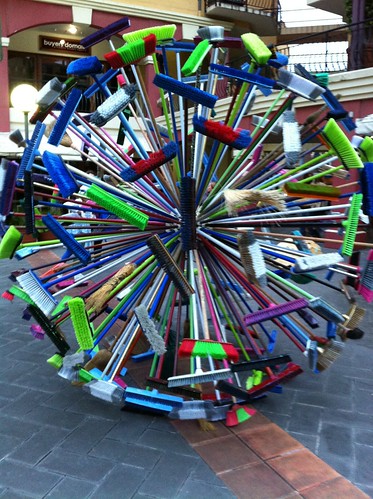
I have no idea if this sculpture is linked to the Makers place (I think it may be), but as I am reading Un Lun Dun by China Mieville it seems a rather wonderful connection with that novel, and a wonderful reuse of brooms.
Sunday, August 17, 2014
Mini Maker Faire and a few other things at the Powerhouse Museum 16 August 2014
The @OpenROV stall at @MakerFaireSYD is set up! #MMFSYD pic.twitter.com/bV1WFAs6eu
— Dominik Fretz (@codewithpassion) August 15, 2014
You can follow other OpenRov devices as well for example, the one in this photograph is @rov1081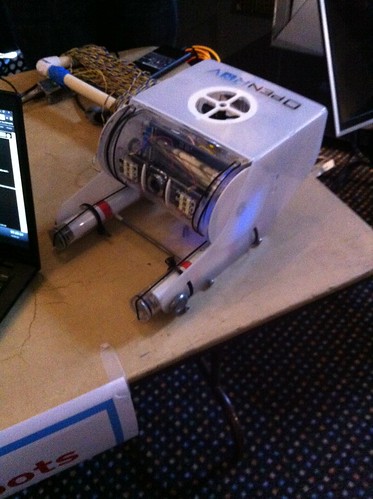
This was part of the Mini Maker Faire which is at the Powerhouse Museum this weekend.
I had been to maker fairs before, they just have had many different names. This one was a lot of fun because of the diversity of makers.
The Embroiders Guild was present encouraging people to add to a collaborative piece of embroidery, and to have a go.
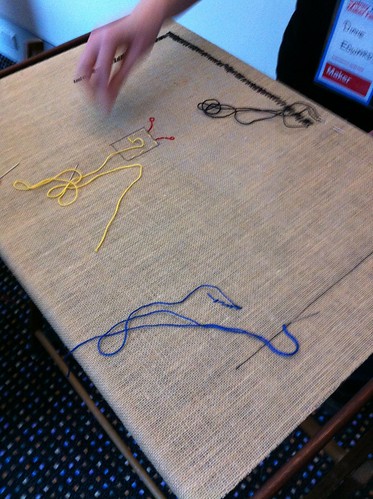
Lace makers were in the Lace Centre showing needle and bobbin lace methods.

You could have a try at bobbin lace, which was was soothingly mathematical.
The fablab was going apace with the Hack the collection items being printed. The museum objects were in their cases, and their new partners were being printed. You can read about it here, and access the museum files here.
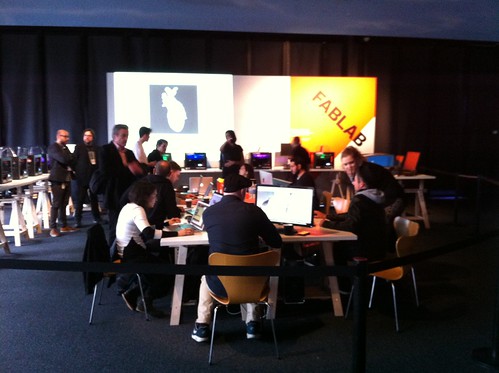
And of course there were drones
I enjoyed seeing the range of makers, and being able to talk with the people behind the ideas. This was fun. People were generous and enthusiastic. I liked the broad interpretation of maker, which is appropriate. There are many exciting ways libraries can connect with the makers in their community.
Saturday, July 26, 2014
Mending and makers
I follow the Tom of Holland blog which is about mending and repair, mostly of knitting. His latest post is called Mending books and it is books about mending, and is well worth reading. There are some lovely examples included. I have not yet seen libraries offering mending programs. It does not mean they are not happening, I have not seen them and would be interested if libraries are offering them - so please add a comment if you know of one.
The mending and repair would fit will with sustainability, and also seems a very neat fit for libraries. Most public libraries will have some collection items relating to mending and repair and these collection items could be combined with library programming. It is a nice way to promote the collection, encourage repair, and help with sustainability. It can also be used as a way to show people how to search on Trove, and do text correction, which is a kind of mending.
There could be partnerships in the programming, like the one on upholstery running as part of the Sydney Design. Partnerships with Mens Sheds could also be valuable, and some libraries are doing work in this area. Or you could establish something like the Brighton Repair Cafe, or work with partners to do this.
It would also be a fit with some of the maker activities running in libraries. It is not making something new, but it is making something older be still usable, rather than becoming discarded, and it can add new character (see this example of mending on the Tom of Holland blog).
Even if you will never mend something, read the Tom of Holland blog for enjoyment.
The mending and repair would fit will with sustainability, and also seems a very neat fit for libraries. Most public libraries will have some collection items relating to mending and repair and these collection items could be combined with library programming. It is a nice way to promote the collection, encourage repair, and help with sustainability. It can also be used as a way to show people how to search on Trove, and do text correction, which is a kind of mending.
There could be partnerships in the programming, like the one on upholstery running as part of the Sydney Design. Partnerships with Mens Sheds could also be valuable, and some libraries are doing work in this area. Or you could establish something like the Brighton Repair Cafe, or work with partners to do this.
It would also be a fit with some of the maker activities running in libraries. It is not making something new, but it is making something older be still usable, rather than becoming discarded, and it can add new character (see this example of mending on the Tom of Holland blog).
Even if you will never mend something, read the Tom of Holland blog for enjoyment.
Tuesday, June 17, 2014
The book to art club
This project is part of the Library as incubator project work. I have just joined the book to art club. I am not quite sure how it will work, hence joining. I have borrowed the June book from my local library, but have yet to start to read it.
There are some groups who meet to do the art/craft together but there are also dispersed members. I am trying it as a way to see how it fits with readers advisory work and makers (and I think it will). I will write about it in a future post. The June book is about graffiti so I will be interested to see what (legal) ideas come forth. There is a back list of titles and a facilitators guide.
There are some groups who meet to do the art/craft together but there are also dispersed members. I am trying it as a way to see how it fits with readers advisory work and makers (and I think it will). I will write about it in a future post. The June book is about graffiti so I will be interested to see what (legal) ideas come forth. There is a back list of titles and a facilitators guide.
Monday, June 16, 2014
my review of The artist's library
 The Artist's Library: A Field Guide by Erinn Batykefer
My rating: 4 of 5 stars
This is another new book exploring the area of artists/makers and libraries. The writers of the book manage the excellent Library as incubator project blog. There is a scarcity of writing in this area and this book makes a helpful contribution.
This book seems to be written for library clients/artists/makers, but it can also be used as a source of inspiration and ideas for library staff when developing programs, services and partnerships. There are many examples of how artists work with libraries. There is useful information about copyright and online resources. They explore the "inherently inspiring nature of libraries". Does this describe your library?
The poem by Joseph Mills called If librarians were honest gains a worthy inclusion.
Much of the material has been covered on their blog, but this book bring it together well. The chapters have different themes exploring diverse sources of inspiration and ideas, often within the library. The chapters also include the work of artists relevant to the points being made, and some exercises which artists/makers can do, or which libraries could run as programs or services.
It would work well as a companion volume to Bibliocraft by Jessica Pigza
View all my reviews
Monday, April 21, 2014
My review of Bibliocraft - by Jessica Pigza (also known as @handmadelibrary)
 BiblioCraft: The Modern Crafter's Guide to Using Library Resources to Jumpstart Creative Projects by Jessica Pigza
My rating: 5 of 5 stars
This is a wonderful book. This is a book for makers/crafters and library workers. Reading this book brought me lots of joy - I found I was smiling to myself as I read it. It is written by a rare book librarian, and based on five years of crafternoons (a new term for me) at New York Public Library.
This book connects library collections and resources, including skilled librarians, with makers (in this book called crafters, but really they are they same, or at least very very similar). This is the bit that is most exciting as it is bringing library collections, skilled library staff and clients together. It is a book for reference librarians, including local studies librarians, to think about closely as it is a way to help flaunt any library collection to your community, and to connect clients to online resources from all around the world. I have been talking about this for a while, but it was lovely to read about it, as it is a crucial area for libraries to explore in the current maker developments.
There is a section called "finding inspiration at your library" which takes the reader through the different strengths of public libraries and research libraries in an enjoyable and easily readable way. There is a guide to finding libraries, and some helpful hints about planning a library visit (with some key questions to help crafters/makers). The author also has a useful section on finding your way around a library with a quick overview of searching, including an explanation of subject headings (with examples). Digial/online collections are also included (sadly Trove is not) helping people to discover a broader range of inspiration for what they are making. Specialised collections are highlighted (mainly in the USA). Copyright is addressed well, in a very practical way. While i have taken time to describe this section of the book, it takes up a modest number of pages, with most of the book focusing on projects inspired by library collections.
For many of the chapters well known makers/crafters were invited to contribute projects. The author provided research assistance based on their interests (sounds a lot like reference work to me). There are description of the creative process for each project, followed by an information session about particular sources like decorative bookbindings, illuminated manuscripts, and botanical pursuits.
This would be an excellent book for library collections, but also one for library staff to read (it is a quick read) and plan plan programming for - working out ways to highlight their library collection, and connection their clients to online sources of interest.
I have written this review from a library perspective, but it also works well for library clients, giving them the tools to engage with a wide range of libraries, for the best outcomes for themselves.
After reading this book I dug out three knitting project from many years ago. Two jumpers and a vest. The vest was based on botanical illustration, one jumper on the Book of Kells and the other on Mayan writing. All of the materials for these were sourced from the public library I was working in at the time.
View all my reviews
Subscribe to:
Posts (Atom)