Saturday, January 17, 2026

A few thoughts on Say Nothing: A True Story of Murder and Memory in Northern Ireland - implications for oral history collecting

Say Nothing: A True Story of Murder and Memory in Northern IrelandSay Nothing: A True Story of Murder and Memory in Northern Ireland by Patrick Radden Keefe
My rating: 4 of 5 stars

This is a fascinating book and includes an example of how not to run an oral history program in a university library. There are issues of informed consent as some people were talking about criminal activities they had undertaken including murders, a lack of clear policies, secrecy and more. A lot of this has implications for local studies collections in public libraries and it shows the need of following good practice with oral history programs and their recordings. Public library oral history programs are unlikely to be interviewing people about their criminal activities and making promises about who can access the recordings (ignoring legal processes).

It is as the subtitle says a true story of murder and memory in Northern Ireland - with a focus on action from the IRA (and the not Unionist groups). It is a pacy, compelling and depressing read.

View all my reviews

Saturday, January 3, 2026

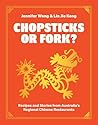
A few thoughts on Chopsticks or Fork?: Recipes and Stories from Australia's Regional Chinese Restaurants by Jennifer Wong, Lin Jie Kong

Chopsticks or Fork?: Recipes and Stories from Australia's Regional Chinese RestaurantsChopsticks or Fork?: Recipes and Stories from Australia's Regional Chinese Restaurants by Jennifer Wong
My rating: 5 of 5 stars

I loved the television series this book is based on, and I loved this book. It is an exploration of the history of regional Chinese restaurants in Australia. It encouraged me to try more of these and I had some lovely meals as a result of this exploration. This book is an important work for local studies as it shows the importants of documenting a variety of perspectives, and valuing the ordinary. An excellent read, and it should serve as inspiration for people considering oral history recording or documentary photographs.

View all my reviews

Saturday, January 18, 2025

A few thoughts on Empireland by Sathnam Sanghera


Empireland: How Imperialism Has Shaped Modern BritainEmpireland: How Imperialism Has Shaped Modern Britain by Sathnam Sanghera
My rating: 5 of 5 stars

While this book has the subtitle - How imperialism has shaped modern Britain - it is relevant to all the countries which were part of this empire, including Australia. As well as being a book which looks at international history, it is also a brilliant book for how we consider local studies with several sections showing the exclusion of histories of people who are brown or black from library collections. It includes a calling out of inaccurate information which removes key people of colour from the centre of historic events.

This was an amazing book to listen to (which I did because my library did not have a print edition for me to borrow). The listening turned out to be a key element with outstanding narration helping to drive home some of the points made.

This is an important book to read and listen to. It will be of interest to those who watched the series , What the British stole .

View all my reviews

Monday, November 25, 2024

Documenting ordinary stories: Local studies collections in public libraries - a couple of papers and a thesis


Documenting ordinary stories: Local studies collections in public libraries
This paper describes research to consider how practices for local studies collections in Australian public libraries might need to shift to ensure that as well as including the historical past, that recent and current concerns and interests of the community are appropriately collected and reflected in their collections. This research used ethnography as a method to explore one public library in detail. Drawing on the metaphor of mirrors, windows and sliding glass doors, the research results describe how a social justice framework for local studies collecting in public libraries could ensure greater inclusion and equity. Such approaches can amplify voices that may have been silenced and enable people and themes with little visibility to be much more visible within local studies collections in public libraries. The conclusion is that a social justice approach to local studies collections in public libraries has the potential to provide a more representative record of the community as a wider range of voices and stories are documented, collected, preserved and made available for research and other uses. For this paper you may need to contact your friendly aggregator https://doi.org/10.1177/0961000624129031

 We collect ‘everything’: A case study of a local studies collection in an Australian public library 
This paper about research which I undertook, was recently published in Journal of the Australian Library and Information Association The abstract is here: This paper describes research exploring a local studies collection in an Australian public library. It includes the current collecting practices and paradigms and their impact on what is added to this collection. This research was to discover how contemporary content, including items from rapid response collecting are incorporated in a local studies collection. It uses a social justice approach to investigate how current collecting practices represent the whole of the community in a public library local studies collection to provide multiple stories and perspectives. Ethnography was the research method used to enable in-depth understanding of the collecting practices of one public library. The results of the research show a tendency for library staff to rarely say no to unsolicited donations, as well as a focus on emotional and decision making based on relationships. This led to donations based on relationships and the risk of collecting from cliques and resulted in an increased cataloguing backlog for the local studies collection. The conclusion is that for more of the community to be represented in a public library local studies collection, changes in collecting practices need to be undertaken to include a social justice focus. You should be able to access the paper to read it at this link https://doi.org/10.1080/24750158.2024.2386642

If you want to access the papers and can't please contact me. 

If you really want to read more, my thesis:
If we don't take that who will: an ethnographic exploration of a local studies collection in an Australian public library is available to read here  (and you can read the abstract there too).


Friday, September 20, 2024

A few thoughts on The outback court reporter - it is a local studies book for some communities.

The Outback Court ReporterThe Outback Court Reporter by Jamelle Wells
My rating: 4 of 5 stars

This audiobook read by the author takes a detailed look at the activities of courts in outback parts of Australia. It is a very interesting look at the range of court matters as well as providing local anecdotes and information. This is a book which locations mentioned in it should consider for their local studies collections. It includes family experiences with health services in more remote areas too.

View all my reviews

Friday, September 13, 2024

We collect ‘everything’: A case study of a local studies collection in an Australian public library

We collect ‘everything’: A case study of a local studies collection in an Australian public library about research which I undertook, was recently published in Journal of the Australian Library and Information Association

The abstract is here:

This paper describes research exploring a local studies collection in an Australian public library. It includes the current collecting practices and paradigms and their impact on what is added to this collection. This research was to discover how contemporary content, including items from rapid response collecting are incorporated in a local studies collection. It uses a social justice approach to investigate how current collecting practices represent the whole of the community in a public library local studies collection to provide multiple stories and perspectives. Ethnography was the research method used to enable in-depth understanding of the collecting practices of one public library. The results of the research show a tendency for library staff to rarely say no to unsolicited donations, as well as a focus on emotional and decision making based on relationships. This led to donations based on relationships and the risk of collecting from cliques and resulted in an increased cataloguing backlog for the local studies collection. The conclusion is that for more of the community to be represented in a public library local studies collection, changes in collecting practices need to be undertaken to include a social justice focus.

You should be able to access the paper to read it at this link https://doi.org/10.1080/24750158.2024.2386642

Monday, March 20, 2023

A few thoughts on the book The Australian history industry


The Australian History IndustryThe Australian History Industry by Paul Ashton
My rating: 5 of 5 stars

This is an amazing book which would be great to re-read (even though I have just finished reading it). It is a pacy and entertaining exploration of researching history in Australia. It is a remarkable contemporary book with issues of the pandemic and other recent events part of the discussion of the work of history. The varied perspectives help to describe the complexity of historical research. This would be a helpful book for local studies library staff to read.

View all my reviews

Sunday, January 9, 2022

A few thoughts on the book A modest living: memoirs of a Cockney Sikh

A Modest Living: Memoirs of a Cockney SikhA Modest Living: Memoirs of a Cockney Sikh by Suresh Singh
My rating: 4 of 5 stars

This is a really interesting local studies publication which I found out about from Spitalfields Life. It is written about growing up in London, and spending time in India with very specific locations being described. The author provides a very strong picture of his father. It is also a very interesting account of being punk, and being the first in the family to obtain a university degree. It shows the importance of having information about culturally and linguistically diverse people included in local studies collections. This really is a charming book, and includes some family recipes as well.

View all my reviews

Sunday, November 7, 2021

A few thoughts on the book: The troubles and beyond: curating conflict

The troubles and beyond: curating conflictThe troubles and beyond: curating conflict by Karen Logan
My rating: 5 of 5 stars

This book is about how the National Museums in Northern Ireland changed their approach to collecting information about The troubles, and also changed their approach to how exhibitions about this time are shown. They aim to present a 'view of broader social, cultural and economic history as well as exploring the impact of conflict on everyday life, people and communities' p 18. They are seeking a critical discussion with the community who are coming to exhibitions, especially of recent history. They are looking at recent history including for 'accuracy, inclusiveness and balance' p24, and are also seeking to build stronger community connections to advise the museum.

The book explores past approaches to describing The troubles, and the new approach of greater diversity and inclusion as well as community projects which are bringing together people who have similarly tough experiences. There are comments from people who provided personal testimony to the museum because they were shot, they had a family member killed, they were present at a bombing, or they were a nurse who treated people from all sides.

I was interested in this book because of local studies, and reading it highlights that difficult and divisive topics can be dealt with well by museums (and presumably libraries) and that it is important to not sidestep the tension.

View all my reviews

Sunday, August 22, 2021

A few thoughts on How to turn a place around: a handbook for creating successful public spaces - relevant to libraries

How to Turn a Place Around: A Handbook for Creating Successful Public SpacesHow to Turn a Place Around: A Handbook for Creating Successful Public Spaces by Project for Public Spaces
My rating: 4 of 5 stars

This is a pacy and engaging read. This, unsurprisingly, is a book about public spaces, and generally outdoor space, however there are many elements which are applicable for public (and other) libraries as well. In a description of Discovery Park in Houston, TX, it says that it is 'not enough to have just one great destination on a great park - you need at least 10 of them to create a truly lively place' (p91). This is relevant for libraries as you need different kinds of spaces within the one building. It is also not a new idea that libraries need different kinds of spaces, for example see this produced by my work place.

I have been following Project For Public Spaces for a while, but it was watching a recent Victorian public library conference about library buildings which encouraged me to read this. There are place making principles including creating a place not a design, and the importance of community consultation, and evaluation. Place making is also continuous as communities change over time.

I found it was helpful reading this book, because of the different locations explored as I could then think about the implications for libraries. I will need to read it again, but that will be enjoyable.

View all my reviews

Tuesday, July 13, 2021

A few thoughts on Pivoting During the Pandemic: Ideas for Serving Your Community Anytime, Anywhere

Pivoting During the Pandemic: Ideas for Serving Your Community Anytime, AnywherePivoting During the Pandemic: Ideas for Serving Your Community Anytime, Anywhere by Kathleen M. Hughes
My rating: 4 of 5 stars

This is an interesting publication for many reasons including the short, snappy chapters and the speed of the production. The range of topics covered include online story times, readers's advisory at a distance, and how to help connect people with a range of (mostly) online services. It is timely that I am writing this during the lockdown which includes Sydney (where I am) as well as coastal local government areas to the north and south. It highlights that the relevance is not just for pandemic experiences overseas. Important ideas are covered early on, including be patient, be flexible, use a growth mindset as well as the importance of assessment and reflection.

The chapters are written by public library staff, and show the need for continued learning, being willing to change, and the importance of thinking through organisational policies for example: do they make things easier for staff but harder for the community? It highlights the importance of continuing professional development, and that includes moving some training online (as we have also done in NSW). I would suggest reading this book - and keep in mind, if you don't like one chapter, you can quickly flick ahead to the next one. This ideas in this book while relevant for the pandemic are also relevant to how you think about your general library services.

View all my reviews

Tuesday, June 1, 2021

#BlogJune, maybe

 I saw the post this morning by @Infoventurer and was reminded of #BlogJune.

I had a look at the posts from 2011 the first year I participated in #BlogJune and it was (mostly) about libraries I would like to visit.  I would rethink the list now, and also take more account of other factors. 

I won't be posting every day, but will try and play along for some of the time.


Sunday, January 31, 2021

online reading groups and neighbours - combining a few ideas for #GlamBlogClub

 It was only recently that I realised it was ten years since #ReadIt2011 and it was because I was wearing a t-shirt with this hashtag on it.  #ReadIt2011 was the start of of a collaborative twitter reading group which lasted until the end of 2018.

#ReadIt2011 was a theme based reading group so you read around a theme and not just one title (this was to help libraries be able to participate with the collections they had rather than purchasing lots of one title). You can see the (dated) blog here.  It even had a couple of t-shirts (thanks to @CatyJ).  This twitter reading group was about public libraries in NSW working together (hence the neighbour aspect). The themes were decided on by a group (including me).  What this meant was that it could be collectively promoted, and each library did not have to do a lot.  Some libraries tweeted the themes and the times of the online discussions, other libraries participated in these discussions - this continued through the various versions of the group.  It was my year of making tea cosies to tie with the themes (as I was trying to make the point that the themes can be used in a variety of ways.

whodoneit tea cosy
The #CrimeRead tea cosy for #ReadIt2011 (it has been given away)

2012 was the national year of reading, and the team which had done #ReadIt2011 offered to run a twitter reading group for this nationally (so there was yet another hashtag change). There were some active participants from other states as well.  #Love2Read twitter discussion used the themes suggested in the logo.  After 2012 people were still keen, but had learned more about hashtags (although not about #NotAllLowerCase) so that read became part of each hashtag, and the reading group was called Read Watch Play, using #RWPChat so that a wider group of library activities were included. It meant that people could read different themes each month or work out how to bring their favourite reading, watching or playing to every theme (and ambiguity was encouraged so that #ReelRead included film, sewing and fishing).  The planning included suggestions on a wiki so that many people could contribute ideas, with the themes decided at a meeting (based on who was there).

There is a lot I could say about this, but to tie it to neighbours I will focus on one aspect. At this time it became an international twitter reading group. There were some fairly quiet partners, but Nelson Public Libraries in New Zealand, Public Libraries Singapore and Surrey Libraries in England were all active partners, suggesting themes, writing blog posts and participating in the twitter discussions.  This highlights that neighbours can be a bit further away, through the use of online connections, and you can see a bit more about it here and here. There is a data-visualisation of the tweets (it takes a while to load).The international partners also highlight that neighbours can be anywhere. On the neighbours aspect it can matter who is digitally near us but online connections internationally are valuable.  

It also matters who is geographically near us as Yarra Libraries shows, and as can be seen here in research from my work place.


Tuesday, December 1, 2020

A few thoughts on the book Archives and special collections as sites of contestation

Archives and Special Collections as Sites of ContestationArchives and Special Collections as Sites of Contestation by Mary Kandiuk
My rating: 5 of 5 stars

This book focuses on the need to disrupt some archival and library practices, for example the need to have items catalogued in the language they are written in (for example Spanish or Japanese) and not only in English. It also has helpful examples of how to describe and provide access to archives with racist content in a way which provides a better understanding of their creator/s. This is not to change the past, but to improve the understanding of it.

This book shows the importance of building new collections which address the importance of social justice, to include those who have historically been excluded from collections, while being visible in the communities. Building new audiences for archives (both old and new) is shown as crucial, for sustainability and for understanding the historical context (recent or further in the past). Elizabeth Hobart reminds us that
Cataloguing is an ethical act, ensuring the discoverability of library resources regardless of content...Without a detailed, accurate record, items literally remain hidden . This applies to many collections in libraries.

There are many ideas of relevance to local studies collections in the different chapters in this book.

This is yet another excellent publication from Library Juice Press. My copy has lots of annotated post it notes sticking out, with notes on them for follow up.

View all my reviews

Friday, November 6, 2020

A few thoughts on How to create a relevant public space by Aat Vos

How to Create a Relevant Public SpaceHow to Create a Relevant Public Space by Aat Vos
My rating: 4 of 5 stars

This book reads like it is written as a provocation. It has many interesting ideas, and I don't agree with them all, but it is still interesting reading. Ideas to consider include, who are you excluding from your library. It may not be deliberate (or it may), but it could be in how the library is designed, and services are provided that some people feel unwelcome. The chapter by Diane Ghirardo is of particular interest for this.

One of the libraries discussed (in Gouda) was a chocolate factory before it was a library. The chapter by Jan David Hanrath and Rob Bruijnzeels highlights the importance of telling the stories of the buildings in a context like local studies. They also stress the importance of collections, and of connecting communities to these collections.
It is important that you remain true to yourself. The library's existence begins and ends with the collection. I mean a modern collection with, in addition to books, other forms of content such as music, art, tools, videos, course and activities, either physically or online. But that the collection is the core...the collection is what you inspire people with stories and information that is relevant to them...The library is going to ask questions, questions that are important for both individuals and community' (pp162-163, 165).

There are many lovely photographs of libraries in this book, but for some of these libraries access seems limited to those who are able bodied with stairs seeming sometimes as barriers not for access. When reading this book, think about whose voices are not included.

View all my reviews

Wednesday, November 4, 2020

A few thoughts on Cultivating civility: practical ways to improve a dysfunctional library by Jo Henry, Joe Eshleman, Richard Moniz

Cultivating Civility: Practical Ways to Improve a Dysfunctional LibraryCultivating Civility: Practical Ways to Improve a Dysfunctional Library by Jo Henry
My rating: 4 of 5 stars

This is a helpful follow up to The Dysfunctional Library: Challenges and Solutions to Workplace Relationships. The chapters in this book each have a different focus and include work place examples. At the end of most chapters are questions for discussion which could be helpful prompts for a reading group. This could be an interesting book for a work reading group, and would suggest that the focus is on chapters and not the whole book as there is much to explore chapter by chapter. While much of this information is not new, it is brought together in a helpful way, to help people improve communication and relationships at work. There are many references to explore for further reading including The Desegregation of Public Libraries in the Jim Crow South: Civil Rights and Local Activism (which I am yet to read), Algorithms of Oppression: How Search Engines Reinforce Racism (which I probably should re-read) and Masked by Trust: Bias in Library Discovery (which I am currently reading). This is a book which encourages creative thinking to solve problems, but also encourages taking action against bullies (including passive aggressive ones). The references at the end of each chapter provide much additional reading to explore specific topics.

View all my reviews

Saturday, October 31, 2020

Writing about failure for #GLAMBlogClub

Failure can be a way of learning. It can also be uncomfortable, disconcerting, at times distressing or even very traumatic. It can depend on the scale of the failure. I think there are different kinds of failure, including failure you can learn from, and failure which has catastrophic consequences (and these are not the only kinds of failure, there are more including failure which is out of your control).  You can learn from the second kind of failure but there are usually really bad things happening along the way (for example think of how the COVID-19 pandemic is happening differently in each country, state and territory, how the climate crisis is not being dealt with and in relation to systemic racism and injustice towards Indigenous people, as well as the experience of other systemic racism - and comments about this). There are many more examples I could provide for failure with catastrophic outcomes and these broader failures have an impact. In our work places (galleries, libraries, archives, museums and records repositories) it is mostly the failure you can learn from, but the fire in the National Museum of Brazil is of the catastrophic kind (see also Blue Shield for their work or disaster prevention). 

Have a look at this earlier post I wrote about failure (and yes I know that at least one of the people I quote is contentious).

I also think we can shy from talking about failure, and I find this unhelpful.  I think it is better to go 'that could have worked better' (which can be a way of describing failure without resorting to a 'woe is me' approach), and see what can be done better next time, rather than pretending every thing is fine.  We can do better with our collections (this looks a helpful session to participate in) and services (think about who is invisible in your library, and this US information from 2015 may be helpful).  We can make these changes because otherwise we continue to fail at least some parts of our communities.


Tuesday, October 27, 2020

A few thoughts on Incubating creativity at your library: a sourcebook for connecting with communities by Erinn Batykefer and Laura C Damon-Moore

Incubating Creativity at Your Library: A Sourcebook for Connecting with CommunitiesIncubating Creativity at Your Library: A Sourcebook for Connecting with Communities by Erinn Batykefer
My rating: 4 of 5 stars

This is a pacy read with examples of these ideas being described from actual library experience. If you have read the Library as incubator project blog or The Artist's Library: A Field Guide you will have already seen much of the content in this book, however, this book is still well worth reading. While the premise of the book is how to incorporate more creativity in your library, the ideas would also be applicable for thinking about how to better connect with many groups and individuals in your community (and the authors suggest this). The chapter on evaluation has some useful ideas to consider to help people think more effectively about how to evaluate programs. The book looks at resources, partnerships, staff, evaluation, community and more. Sustainability is important as is looking at long running programs to see if they should continue, be changed or stopped.

I also enjoyed the shout out to BiblioCraft: The Modern Crafter's Guide to Using Library Resources to Jumpstart Creative Projects as I am a fan of this work and they way it shows different ways to think about collections.


View all my reviews

Wednesday, October 14, 2020

A few thoughts on The dysfunctional library: challenges and solutions to workplace relationships

The Dysfunctional Library: Challenges and Solutions to Workplace RelationshipsThe Dysfunctional Library: Challenges and Solutions to Workplace Relationships by Jo Henry
My rating: 3 of 5 stars

This is a useful book to help you describe how dysfunctional the library you work in is (if your library is dysfunctional). The authors provide ways of exploring this, and of working to decrease dysfunction. They start with the individual library worker providing advice about how to explore one's own level of disfunction. They encourage an outward looking focus, and highlight the importance of professional development.

They make effective use of research and highlight work being done in a range of libraries (and provide these references to follow up). This book is about encouraging library staff, and then libraries to be the best we can be, working well with each other, and for our communities. Being proactive and planning is important as is professional development for staff. Good leadership is important, but it must be the right style of leadership.

This may not be a book to read cover to cover, however, it has some very useful information as well as reference to follow up for further reading.

I am trying to increase my professional reading, which I usually do as commute reading, but have been working from home since late March.

View all my reviews

Monday, August 31, 2020

thinking about time - a post for #glamBlogClub

Strangely I thought I was out of time to write this post.  Yes, I should be doing something else with my time at present but am choosing to use my time this way.

I suggest you spend five minutes look at 367 Collins St Falcons (there are two eggs) or you could watch Sea-EagleCAM4 (there are two youngsters) or enjoy penguins in the evening (and make sure you read Virginia Trioli's post which includes information about the Peregrin Falcons and penguins).  There is information in all these links. Please also choose to use some time enjoying Peacock Spiders 🕷 (there are lots more videos of them).


I have been encouraged by the way many libraries have been spending this pandemic time serving their communities in different ways, and while only some libraries are mentioned here it is great to see that part of the wider story is being told. You may make time to read this research NSW public libraries - the COVID-19 response (put out by my work place).

Take time to explore the British Library sound archive and think about how you are (or aren't) recording sounds in your community. Are you recording the sounds of your community?

Take time to be excited by the coming Horror Writer's Association's Librarians Day as you can participate as it will all be online (information and link to register is here).  You also have time to anticipate this as it is on in November.  I am genuinely looking forward to this. There may still be time to register for one of the Summer Workshop Series on Anti-Oppression and Oral History from Columbia University (information and link to register is here).

I am out of time to write this post, and if I had taken more time to write it, it would have flowed better.