Showing posts with label review. Show all posts

Monday, April 18, 2016

a few comments about Cosplay in Libraries: how to embrace costume play in your library by Ellyssa Kroski

Cosplay in Libraries: How to Embrace Costume Play in Your LibraryCosplay in Libraries: How to Embrace Costume Play in Your Library by Ellyssa Kroski
My rating: 4 of 5 stars

The title describes the contents of this book really well. It is all about how libraries can have events which include cosplay. There are very detailed annotated resources lists, and almost step by step guides for different kinds of event planning (for example 'host a comic or anime con in your library', 'how to host a cosplay contest'). These lists would give a new event planner, or an event planner new to cosplay events, a lot of confidence. The helpful event planning information would be relevant for other events as well.

There are some excellent examples of how some public libraries in the USA have been working with cosplay as events or part of events with detailed information about costs, number of participants, information about the events, and links to sites like the Facebook page for the event. I really like the way information about evaluation is included, and the costs provided by libraries allow other libraries an estimate of what to expect (generally staffing costs are not listed in the budgets provided).

This is also a book which can serve as an excellent introduction to cosplay, and the etiquette, protocols and other considerations. It is also a very interesting read. You might like to think about cosplay for your library.

View all my reviews

Tuesday, December 8, 2015

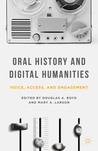
Review of Oral History and Digital Humanities: Voice, Access, and Engagement

Oral History and Digital Humanities: Voice, Access, and EngagementOral History and Digital Humanities: Voice, Access, and Engagement by Douglas A. Boyd
My rating: 5 of 5 stars

I read this book after hearing a talk by Douglas A. Boyd. It is an interesting and detailed exploration of oral history. The chapters are written to show good examples of what is possible and in some instances to show what could have been done better (like not reducing the background sounds). Ideas such as Creative Commons licensing, are included.

The importance of long format oral history is discussed, and that the length of the interview and the detail recorded add value and provide much research potential. Oral history is not about snappy sound bites. The importance of oral history being online, and searchable (through the use of methods such as OHMS) is also covered. That oral history is listened to, is also highlighted. It sounds obvious, but when much access has been via transcript, sometimes that it is a spoken method can be forgotten. There is good coverage of the importance of access to the recordings so it is important for non-digital formats to be digitised, catalogued, indexed and made available for people to research and listen to for other reasons.

"I believe in the primacy of the recording for our professional practice, while fully understanding and acknowledging the role of text to facilitate discovery and access" and looking for "sustainable models to connect archival users to the online primary sources".

It is a book I will have to reread, and keep thinking about the ideas raised in it.


View all my reviews

Monday, August 3, 2015

My review of Global megatrends

Global Megatrends: Seven Patterns of Change Shaping Our FutureGlobal Megatrends: Seven Patterns of Change Shaping Our Future by Stefan Hajkowicz
My rating: 5 of 5 stars

This is an excellent book bringing together global trends. It shows there is hope for changes, but that changes have to happen soon, or the outcome will have no hope. Interesting reading this non-fiction when have inadvertently been reading a lot of catastrophic fiction, A helpful contrast. It is a highly readable book. This builds on earlier research done at CSIRO by the author and others. This is acknowledged in this book.

The megatrends are factors to consider when planning, scenarios of possibilities which you can choose to take action on, hopefully seeking positive outcomes for many people. This is a useful books to read for simply thinking about your own life, but it is also very valuable for thinking about change in your workplace and community.

It brings together some persuasive data, and ideas.

To quote from the book
"My philosophy is that wiser choices begin with imagination. We can seldom look at the future and tell someone the best thing to do. But we can explore, describe and imagine. And thereby create a pathway to better decision making."

"The authors observe that reduced death rate achieved by volunteering was almost as effective as other preventative health measures such as topping smoking"

"The future we create tomorrow hinges on the decisions and actions we take today. What we want is for people to make rational decisions and wide choices. We want people to understand change, set objectives and choose wisely. Moments of freefall happen to you, your company, your society and the world. That's assured. It's not whether change will happen, but when and how you respond."

Reading this book also, yet again, reinforced the huge value of the research done by CSIRO, and the problems caused, or not solved, by the continued cuts to this organisation.

View all my reviews

Tuesday, July 7, 2015

My review of The library innovation toolkit

The Library Innovation Toolkit: Ideas, Strategies, and ProgramsThe Library Innovation Toolkit: Ideas, Strategies, and Programs by Anthony Molaro
My rating: 3 of 5 stars

First up, I really wanted to like this book. I know that the three star rating does not show that I liked it a lot, but it is okay (and I seem to read a lot of books with a three star rating). It is a solid book, with some chapters deserving a 5 star rating (the work by Parkes Library is amongst these), but other chapters were not as strong. It has some good ideas and some useful library examples, and there ideas which can be used from each chapter. Maybe the timing of me reading it was wrong. There were ideas people could use in their libraries, not as many as I was expecting.

My three star rating may also be about the interpretation of the word innovation, but that is a tough idea to correctly position (for example, playing catch up is rarely innovation).

View all my reviews

Thursday, July 2, 2015

My review of The subversive stitch

The Subversive Stitch: Embroidery and the Making of the FeminineThe Subversive Stitch: Embroidery and the Making of the Feminine by Rozsika Parker
My rating: 4 of 5 stars

I had read this many years ago, but had decided it would be timely to reread this since I have been reading books like Craftivism, Bibliocraft, Strange material and the Bayeaux Tapestry. This one really did come first, and those other titles follow very worthily. It is a bit dated, but still a very strong book to read, and much of the anger over historical depictions is still very valid. It is still necessary reading (well, at least very strongly suggested reading) after reading some of the titles listed earlier in the review.

We still need to be angry about mis-depictions of women, and what we do, and what the history says has been done.

View all my reviews

Wednesday, May 27, 2015

My review of Common threads: weaving community through collaborative eco-art

Common Threads: Weaving Community through Collaborative Eco-ArtCommon Threads: Weaving Community through Collaborative Eco-Art by Sharon Kallis
My rating: 5 of 5 stars

This is a wonderful book, and fits very well with the maker and craftivist books I have been reading to explore what is happening in this space. This is a book about collaborative eco-art, focused on great work happening in Canada. Some of involves using invasive plants in a way which removes them, but also stabilises land. There is a lovely example of knitting ivy for this purpose. This books has lovely examples of eco art, as well a many hints and tips for running successful community collaborations in this space. I was very interested by the local government tie in as well.

Many of these works could be part of local studies work with the community as art techniques are learned and shared, as people talk about plants and about the spaces. I really liked the environmental focus and being able to see photographs of the art works as well as the garden spaces. This book highlighted the value of long term collaboration. An excellent read.

View all my reviews

Tuesday, February 17, 2015

My review of Strange material

Strange Material: Storytelling Through TextilesStrange Material: Storytelling Through Textiles by Leanne Prain
My rating: 5 of 5 stars

I took a really long time to read this book, not because I was not enjoying, but because I did not want to finish it. This is the first book I have read by Leanne Prain, and will be reading her others.

This book is a wonderful look at how fabric artists tell stories, some explicit, and some implicit. All through this I kept thinking about the value of these ideas, and how they could be used to create some wonderful local studies content. There are some patterns, prompts and lots of inspiration. There is the idea of using a sometimes overlooked method, textile work, for telling neglected stories. This can be seen as helping to highlight, record and share marginalised culture and experience, it can also be seen as be seen as very inclusive because we all have connections with textiles.

Many artists are interviewed, sharing their motivation and ideas. This is a wonderful combination with illustrations of their work. Some works are comforting, and others are disturbing. Some done by individuals, other collaborations. Many of the prompts would be great for recording oral histories as well as prompts for community art works telling local stories for public library local studies collections. A wonderful read which is also a call to action. It is likely to appeal to people who read for stories.

View all my reviews

Thursday, December 11, 2014

My review of Information doesn't want to be free: laws for the internet age

Information Doesn't Want to Be Free: Laws for the Internet AgeInformation Doesn't Want to Be Free: Laws for the Internet Age by Cory Doctorow
My rating: 5 of 5 stars

I am tempted to simply say read this, it is useful (and full of stories), but that may not be enough.

This is an excellent book for library workers to read as it is a reminder about the importance of changing copyright laws. This book is written to target writers and other creators of content, and the information for this sector has big implications for libraries. It also can be used by libraries who are creators of content (which perhaps should be all libraries).

How content it created and distributed can change how it can be collected by libraries, and some of the methods used would present challenges to purchase orders. Reading this raises many questions for library staff to think about for collecting content so that it is accessible now and into the future.

This is an angry and yet a hopeful book, with much useful information. It is a fast read, with much to think about.

To quote from this book "I don't think the conclusion is foreordained. ON bad days. I'm petrified of the extent to which a despot could use technology to perfectly spy, to perfectly coordinate an army of thugs. But even on bad days, I believe that the only answer to this fear is to seize the means of information and ensure that technology's benefits are distributed to everyone, not just the powerful. A refusal to engage with (or protect) technology doesn't mean that the bad guys won't get it - just that the good guys will end up unarmed in the fights that are to come."

Also from the book "If we have to choose between that vision of copyright and a world where more people can create, more audiences can be served, where our devices are our honest servants and don't betray us, where our networks are not designed for censorship and surveillance, then I choose the latter, I hope you would too."

View all my reviews

Saturday, October 4, 2014

My review of Making is connecting

Making Is ConnectingMaking Is Connecting by David Gauntlett
My rating: 4 of 5 stars

The title sums up the book, but it is still a really good idea to read the book and explore the way the ideas are presented.

A key quote is:
"Why is everyday creativity important? Because I feel that it's incredibly important - important for society - and therefore political...But it is the fact the people have to make a choice - to make something themselves rather than just consume what's given by the big suppliers - that is significant. Amplified slightly, it leads to a whole new way of looking at things, and potentially to a real political shift in how we deal with the world."

The author brings together many examples of making, using examples from social media (including Flickr and Youtube) but also using some offline examples of making as well. Gauntlett has a very interesting discussion about art/craft encouraging people to rethink how they think about them, and his discussion is very interesting.

He also looks at Ruskin and the work of William Morris, and this adds a very helpful viewpoint to the discussion. It also highlights the need to explore examples of good practice. Making is very much about making yourself as part of making things, and about our place as citizens. To quote from Ruskin, and this book 'do what you can'. It is also about thinking about consequences for our actions, including the environmental consequences. "Crafting can be a reclamation of the power of life".

I enjoyed reading this book and it is adding to the ideas which I am exploring in this area. It was an entertaining and interesting read where stories were used effectively to illustrate points.

View all my reviews

Tuesday, March 4, 2014

Twitter and society - a review

Twitter and Society (Digital Formations)Twitter and Society by Katrin Weller
My rating: 5 of 5 stars

I thoroughly enjoyed reading this book. It is written to explore the outcomes of different analysis of twitter use and what this can tell us. There are topics ranging from sport, and disasters to journalism and scholarly communication.

Each chapter summary is written as a tweet, complete with relevant hashtags. Most of the writing is collaborative and the majority of authors have twitter accounts which are listed as part of their details at the end of the book.

I am interested in twitter analytics for some of the work that I do and read this book to help my thinking about this. It did. Some of the chapters were very entertaining, and there are many references to follow up. There are parts I will need to reread, but I look forward to to this.

View all my reviews

Saturday, March 1, 2014

It's complicated : the social life of networked teens

It's Complicated: The Social Lives of Networked TeensIt's Complicated: The Social Lives of Networked Teens by Danah Boyd
My rating: 5 of 5 stars

The title sums up the content really well. It is an entertaining and evidence based approach exploring how US teenagers use social media. The information is from research over several years. The specific social media may have changed (Myspace is frequently referenced) but the principles remain the same. It is significant that it is US based research, some of the issues explored will look a little different in other countries. It is a fast read, and people working with teenagers (as well as parents) could benefit from reading it. There are helpful references to other associated research. It is a fast paced and engaging read. Many of the elements of the work may be able to be extrapolated to other use of social media.

View all my reviews