Showing posts with label ideas. Show all posts

Thursday, April 30, 2015

my review of Heiroglyph - great work by @imaginationASU

Hieroglyph: Stories and Visions for a Better FutureHieroglyph: Stories and Visions for a Better Future by Ed Finn
My rating: 5 of 5 stars

This book is amazing. It is a series of short stories (some quite long, others quite short) exploring science and ideas for the future. It is a collaboration between fiction authors and scientists, and comes out of Project Hieroglyph at the Arizona State University and their Centre for Science and the imagination.

I realise I may not be making this sound exciting yet. I wanted to read this book because Neal Stephenson was behind it, and I am a fan of his work. There are many wonderful stories in this volume. Not all of them are equally wonderful, but I am sure some people really loved ones I did not. At the end of each story there are story notes to show where the idea came from, sometimes there is a forum discussion you can look at to see the science explained (and it may be something which is not possible to do yet, but it has possibilities). Sometimes the writer was linked to a scientist so they could check the scientific accuracy of what they wrote about, other times they connected to research.

This book explores ideas, using accurate or potentially possible science. It also has great, amazing and wonderful stories in it. One of the things I noticed reading it was that many of the stories were joyful. There may have been tough things going on, but there was an undercurrent of joy and hope. This was lovely and a contrast to what I have been watching and reading lately. That joy and hope were strong is a great fit for planning a hopeful and positive future in a way which cares for people, and is inclusive an imaginative.

Some choice stories for me were Atmosphaera incognita by Neal Stephenson, The man who sold the moon by Cory Doctorow (this is a very joyful, hopeful story), A hotel in Antartica by Geoffrey A Landis, By the time we get to Arizona by Kathleen Ann Goonan, Elephant angels by Brenda Cooper, Entanglement by Vandana Singh, and Degrees of freedom by Karl Schroeder (exploring different governance structures). There are some wonderful reads not included, but it was starting to seem like I was including too many to be described as a selection.

This is going to be a tough one to place in a library because some people will read it for the science, and others for the ideas. Good cataloguing is essential (actually it always is essential). You can see how it is catalogued on Trove and the summary provides helpful keywords (but a lot of libraries don't add fiction to Trove and so miss out on this). I would have liked a more science oriented subject heading added as well.

View all my reviews

Wednesday, June 25, 2014

My review of Creativity, Inc - a totally amazing read

Creativity, Inc.: Overcoming the Unseen Forces That Stand in the Way of True InspirationCreativity, Inc.: Overcoming the Unseen Forces That Stand in the Way of True Inspiration by Ed Catmull
My rating: 5 of 5 stars

This is a very impressive book, which has ideas of relevance for all workplaces. It provides a history of Pixar, and through it is advice on how to manage a growing organisation, and one where they very deliberately worked a the organisational culture. Mistakes were made, but they were addressed rather than covered up. One of the strongest ideas coming through this is that people learn together, and there needs to be effective feedback, without reprisals or point scoring. I will be reading this book again, to further explore the ideas within it. It is an enjoyable read, and it makes you think about how to improve your own work place, as ideas from this book would work well in other industries. A very clear point is that it is about finding the solution for your workplace, rather than copying. There is some very helpful information in the Disney/Pixar merge content.

"Just because "failure free" is crucial in some industries does not mean that it should be a goal in all of them. When it comes to creative endeavours, the concept of zero failures is worse than useless. It is counterprodutive."
and later in the book
"Similarly it is not the manager's job to prevent risks. it is the manager's job to make it safe to take them"

Read, enjoy and apply.

Note - I would have liked to include more quotes, but scraping them from the Kindle version was not happening.


View all my reviews

Tuesday, June 10, 2014

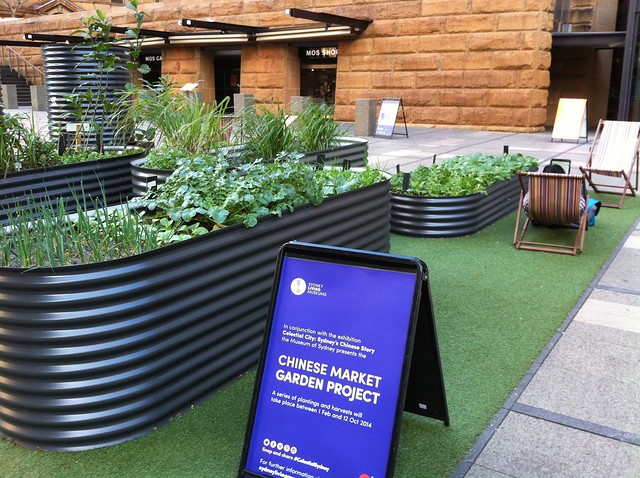
Celestial City

I am yet to go to see this wonderful sounding exhibition at the Museum of Sydney, and yet, it has already given me much pleasure as I have walked past the museum and seen the installation of the garden out the front.

Museum of Sydney #celestialsydney
It is lovely, and I appreciate the information which is being made available in this way, before I even visit the museum. It is a promotion, but it is also a story, and that is impressive.

Wednesday, January 22, 2014

Where do you obtain your reading suggestions from?

I was thinking about this recently, because of the work I do with readers advisory people.  I decided to think about where my reading suggestions come from, to see what is in the mix.

The following list, not in any order, shows some of the places ideas for reading come from for me:
  • public library - staff at my local library will sometimes (proactively) suggest something to read or watch based on my borrowing.  I like this.  It is active without being obtrusive, and is a nice way of demonstrating skills, so that if I want to ask I can.  It also lets people know that you can ask library staff of reading suggestions
  • friends - although most of my friends read very differently to me, this is still an area where ideas come from
  • specific blogs/tumblr I follow. Some of these will be written by authors, and some not. 
  • people I follow on goodreads. There are some people I follow on Goodreads that I will probably not read anything they do, but it is still interesting seeing their reading. There are a few people I follow where I have found that if they give a book a high star rating/excellent review I am really likely to enjoy it. I have tried some titles I would not have thought of this way.
  • twitter - this is different people I follow talking about what they have read, and some time authors tweeting links to free or low cost ebooks as a way of discovering content. I have had some lovely reads this way, as well as a few which I did not finish. I always receive ideas for new reading from the Read watch play twitter reading group as well. Have a look for #rwpchat.  Also have a looks at the different social media channels being used for this discussion - links available from here.
  • Television - I don't watch a lot of television, but it can lead to reading for example I am reading a work by Brian Cox after watching Wonders of life. I am reading a history of the Vikings by Neil Oliver because I have watched some of his documentaries. 
I was thinking about this as I think these are tools to let library clients know about as well, as some may not be aware of how many ways to find out about reading suggestions, but also, some readers may be able to train library staff in some genre specific ways (so learning from the clients).

Does your library use a rang of online tools as part of the readers advisory service? Novelist can be very helpful, and has increasing Australian content, as well as connection with Goodreads.

There are a few libraries on Goodreads, like OCLS and Scottsdale. This could be an option to consider for your community. You may want to introduce it with providing sessions about it to your reading groups, as well as other groups of readers in your library. With anything you are doing online make sure you have day to find links on your website. Don't assume people will see the home page, include links on all pages, including the catalogue. Make sure you tell people about it in the library, and through the community as well. It might draw people into use these services, but you have to tell them about it in spaces they are already in.

Think about how you obtain reading suggestions. Are there ways to inform the readers in you community about some of them.  Are there genre specific options you could connect clients with? Don't forget you can learn from your clients as well. 

Monday, March 25, 2013

Local studies, music and dance - a few ideas

Music seems to be under represented in many local studies collections in public libraries.   It could be that I am looking in the wrong places, however, I don't see many public libraries anywhere with a music collection as part of how they collect and tell the local stories of their community, and few with stories of music from or about their area.  I realise that this is a difficult area, but it is also possible to collect in these areas, as Cork, for example is doing.

Music is a way for story telling for the local community, as bands and singing groups interact in different such as in pubs or community halls.  Music is an important connector for a community and can be important as a community meeting point.  There is much potential for oral histories to be done in this area, and to collect music which has been created as part of library programs.


Exhibit: 1908, When the Democrats Came to Denver from The Denver Public Library on Vimeo.

Some songs specifically mention place names and these should be collected for local studies, in the same way some libraries include recipe books in local studies collections when they have been written by locals (for example books by Bill Granger and Kylie Kwong form part of the local studies collection at Surry Hills Library, only a few minutes from where their restaurants are located).  

Working with local musicians (and they don't have to be famous, just local) as a way of collecting audio and video content is important. They don’t have to be famous, but being local is important.  Don’t forget copyright, work with it.

The Library of Congress has a national jukebox, you could have a local one.  The Smithsonian has Folkways, which has some very local music as part of the collection.

A recent article from the MIT Centre for Civic Media called Dancing in the square: street music as activism, shows some aspects as to why music is a crucial for local studies collections as it helps to tell the story of a community.  This article about punk rock from New York has some similar inspiration for local studies work.  Dongan Hills Public Library has a Wuseum, because of hip hop.   I think there are exciting music or music related collecting opportunities for local studies collections.  You might even want to collect the sounds of your community, expanding the idea of acoustic records of your area (as the British Library is doing).

I haven't mentioned dance much, but the principles are basically the same.  Your local studies information/archives/recordings in the library will be tracking local changes over time - a very exciting thing to be able to do.

I had just finished this post when I saw this Keeping things fresh: Steampunk rapper Professor Elemental on hip-hop and education and this one by Matt Finch.  Both of these posts help show (implicitly) the importance of music to a local studies collection in a public library.
  

Monday, June 4, 2012

apple advisory information instead of readers advisory information

I saw this recently

and it struck me as an interesting variation on readers advisory work, but this time it was apple advisory work.  It was teaching me about apples in an interesting and quick way.

The following image makes it more obvious what the apple rating scale is, tangy or sweet. I thought this seemed like a way of encouraging people to try different kinds of apples, but I also thought you could have a lot of fun with scales like this for reading ideas.
Untitled
Opening the book has done some work around this kind of idea, on a now dead website with some literary fiction titles which was interesting, but restricted to certain reading types and including no non-fiction, graphic novels and so on.

I like the simplicity of the apple banner. It was clear to read and looked classy. I would be interested to hear from libraries who have been trying this kind of promotion.

Friday, November 11, 2011

Libreria Porrua

Libreria Porrua is a Mexican bookshop, one branch is in a large park, near the botanic gardens and the National Anthropology Museum.

This bookshop is impressive because of its light and open structure (it even had a full size tree growing through the building).  It looked a lovely bookshop, the kind any one would like to have in their community.


Libreria Porrua
It had a lovely connection to the park, and is welcoming and engaging. Libreria Porrua - open air bookshop

You can see more photographs of it here

Tuesday, October 4, 2011

Coffee cups for a shop fit out

This photograph was taken in a pop up shop in Brisbane. The small shop sold kitchen wares and food related books. The major design features were lots and lots of paper coffee cups.  They were stacked up as shelves and clustered as sculptures hanging from the ceiling.
Take away coffee cups as shop fittings
You can see some other photographs of this shop here...

Wednesday, July 27, 2011

Agave Library, Phoenix Public Library, Arizona

Agave Library in Phoenix, Arizona is described by Louise Schaper May in Library Journal as one of the new icons in public libraries.

Agave Library - sign

When you are driving (walking or cycling) up to Agave Library this sign stands out blocks away.  It helps build a sense of excitement about visiting this library because this is a very dramatic library sign.  The sign is also welcoming, because you are coming to the library, this building which is making a statement is open to you, for free.  You can borrow items, you can use databases and other online resources, you can participate in library programming, use computers, collaborate, read...the list really goes on and on.  This amazing, beautiful space is yours, and it would be an incredible library to have as your local library.

Ceiling and computer area screening - Agave Library

Parts of the interior have an exposed, industrial look (as you can see in the ceiling here), and this works really well.  There is great use of colour (such as in the non-rigid divider), with seating, and with this shelving (below).

Resin shelving - Agave Library

It was great to see agaves featuring in the landscaping (reflecting the library name)
Agaves at Agave Library

and lovely outdoor spaces for the library as well
Outside sitting area - Agave Library
The library was obviously very well used, with people using the spaces in many different ways.   I visited the library shortly after it opened for the day, and already many people were making use of the spaces, and there was a packed children's event in progress. 

For some areas I did not take photographs because of the number of people using the library (as I did not want to intrude on their experience of their space - I was being a library tourist, this was their library).
Looking through the library - Agave Library

This is one of the most exciting libraries I have ever visited, because of how people were using the spaces, and because of the space and design.  It was a very beautiful library and it was a highly functional library.  It is one of several exciting libraries which I visited (while on holidays) in Arizona. 

Have a look at some of the photographs I took when I visited this very popular and well used library. 

You can see the whole set of photographs I took (or you can look at them here to read the descriptions as well).

Monday, January 3, 2011

Library work as performance - without the applause

This blog is about exploring ideas in public.  They are ideas and thoughts in development and maybe a few rants as well.

In a recent episode of Dr Who, the doctor said
“In 900 years of travelling time and space I have never met anyone who isn’t important”. 
The doctor is right.  This idea is critical for how we treat our library customers.  Are they important?  Yes.  This should influence our behaviour, but it doesn’t always.  We may be having a bad day, they may seem annoying, there are many reasons we may be less than amazing in our customer service.  These factors should not matter because each person who uses our library space and resources, whether online or by coming through the doors, is important, and we need to show that we appreciate this.  It is something to aim for at least.

Staff at Cerritos Library refer to any time they are in the public area as “being on stage”. This terminology is helpful, as being in the public area is a public performance, and it really is any time they are in the space, not just when they are rostered to a service point.  You may not receive applause for a brilliantly assisted reference query, for amazing cataloguing, the creation and maintenance of an easy to use and fun website, great metadata, or for an incredible piece of technology assistance, but you are still performing.  You are on stage, but in a very flexible performance which continues to develop through improvisation – yours and others.  The performance is complex as part of it is how your library is accessible online, how and what items are selected and made accessible, and how public spaces and activities are managed.  Are they managed for the audience/the clients/patrons/readers or are they managed to suit the performers (the library staff)?  Some theatre companies manage their performances to suit the actors and the other workers on the production, and it shows.  The performances are not as interesting and the attitude to the audience is not very positive, you are just there to observe their brilliance (even if they are not being brilliant).  Other theatre companies work at making the audience experience the centre of the performance.   Much music performance also has this kind of approach which leads to a much more satisfactory experience of a performance. 

Even very famous actors, dancers and musicians can become complacent which delivers wooden performances (they look and sounds bored), and should be avoided.  These are warnings for us in our work in libraries.  We should be client focused so that our libraries can be client focused, and we should not be wooden in our delivery of the available services.  This includes in library design, collection management and access, online access and hours.

Next time you are any kind of performance (music, theatre, dance…and it may be interactive, you may the one singing or dancing) think about how it relates to your work in a library.  What elements of the performance were effective for you?  Which could have been improved?  Think about the whole experience including the bar staff.   If you had to hand you bag over to be minded, do they make you feel like a criminal or like they were being helpful?

What can you learn about this in terms of customer service for your library?  How can you stay enthusiastic all the time?  How can you help other library staff become and stay enthusiastic?