I have just reached ten years on twitter. Some of you have been on twitter for longer, some shorter. One way to look at the ten years is by the work of @mhawksey and a twitter archive. August 2013 was peak tweeting for me. It is easy to set up your own twitter archive. There is a video of how to do this. The twitter archive just updates in the background, and is an easy way to look at tweets over time.
My tweeting has changed over time. At first it was only library related, and then I introduced some other areas such the environment. I also follow a wider range of people and organisations including more knitters. What has stayed the same is that I am still a conference tweeter and I still tweet some of my professional reading.
How has your tweeting changed over time?
Monday, October 29, 2018


Monday, September 24, 2018
How easy do you make it for people to know the hashtags to share about your library?
I like it when hashtags are easy to find. The top picture shows how the Royal Botanic Gardens, Sydney makes it easy for people to find their hashtag. It is in various places through the gardens. You can see how people are using #rbgsydney.
The picture below shows part of a page from Pompom, a knitting magazine, and each knitted item has its own hashtag. Using the example of #ixchelpullover, you can see, as well as the magazine images, people sharing their own knitting.
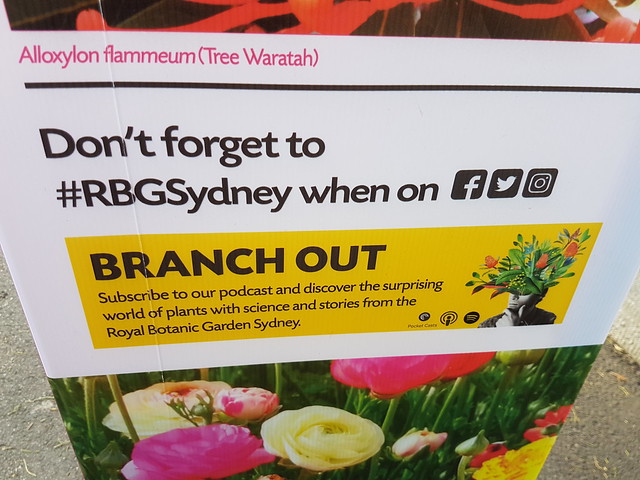 |
| Sign in the Royal Botanic Gardens, Sydney showing the hashtag they are encouraging people to use |
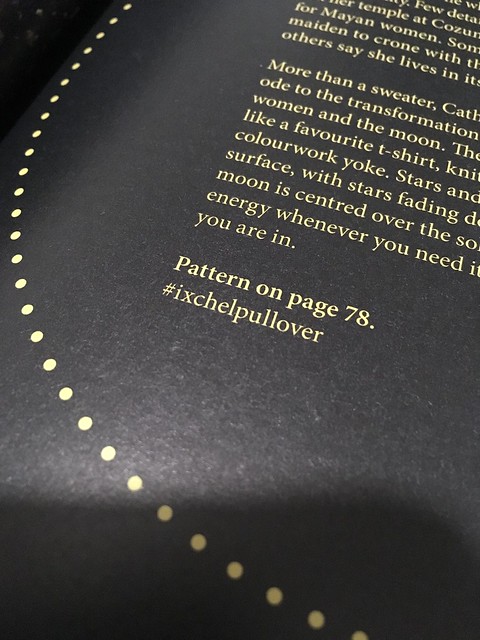 |
| Picture of a page in Pompom magazine, where each knitted item has a hashtag. |
Thursday, August 16, 2018
'don't be complicit in our silencing' powerful call from Sonali Dev for taking action on library collections
This is a powerful speech by Sonali Dev - listen and take action for your collections
Tuesday, August 7, 2018
make sure your local studies collection is inclusive
There has been a lot of discussion about representation in knitting, on Instagram and twitter, following a presentation by Lorna Hamilton-Brown at the recent In the loop #intheloop10 conference. Videos like the one below are an example of people sharing stories so that history is more accurate. I am really enjoying these stories. I am hoping some libraries will collect them.
These stories may also be under represented in public libraries. You may only be collecting local studies information about part of your community, and not, for example recent migrants, people with a disability, or Aboriginal and Torres Strait Islander people. These are just some examples of people who may not be having their stories and histories included.
The talks from In the loop 10 will be available to watch online soon.
Also - are your library knitting groups inclusive?
These stories may also be under represented in public libraries. You may only be collecting local studies information about part of your community, and not, for example recent migrants, people with a disability, or Aboriginal and Torres Strait Islander people. These are just some examples of people who may not be having their stories and histories included.
The talks from In the loop 10 will be available to watch online soon.
Also - are your library knitting groups inclusive?
Subscribe to:
Comments (Atom)